
The short answer: Put them in different zones, not just different tables — account for sightlines, traffic patterns, and buffer guests. Then delegate day-of monitoring so you can actually enjoy your wedding.
Let’s set the scene. It’s your wedding — your wedding — and somewhere between the cocktail hour and the first dance, your mother-in-law, Linda, is going to locate your sister, Becca, across a crowded room and do that thing with her face. You know the thing. The tight little smile that means I remember what you said at Thanksgiving 2019 and I will be thinking about it until I die.
You cannot prevent the face. But you can control the geometry.
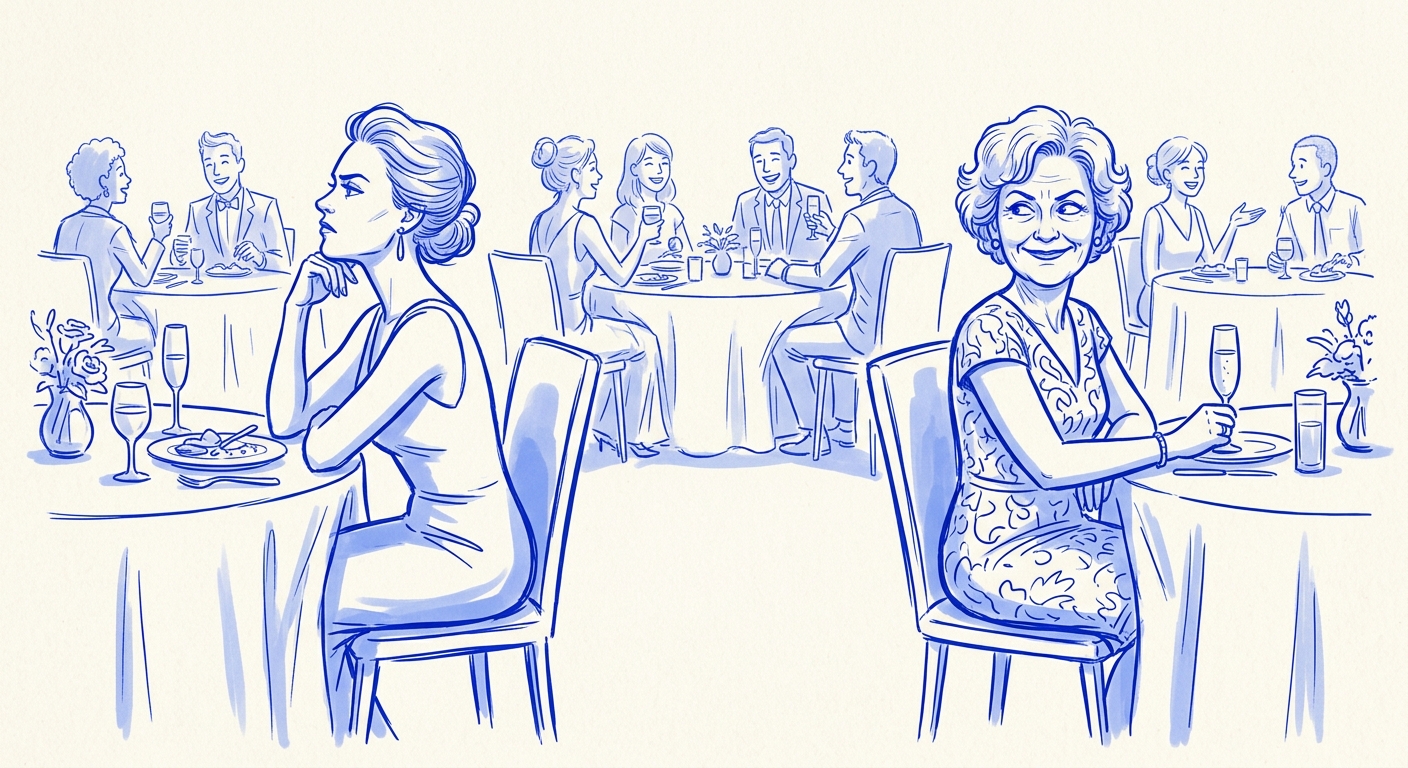
Seating charts exist, at their core, for exactly this problem. Not for aesthetics. Not so the place cards look cute on the escort card table (though they will). For this. For Linda and Becca. For every event in human history where two people who share a mutual dislike have been forced into the same catered venue and someone — you, specifically — had to figure out where to put them.
Here’s how to do it without losing your mind, your deposit, or your relationship with either of them.
Step 1: Map the Blast Radius Before You Place Anyone
Before you place a single name, you need to map the conflict honestly. Linda-and-Becca is not a contained explosion — it has a blast radius. Who are the people likely to get caught in the crossfire? Your mom, who will feel compelled to defend Becca? Your partner’s brother, who finds the whole feud hilarious and will absolutely poke it? The three mutual acquaintances who have heard both sides and are tired?
Get these people documented. PlaceCard’s attendee notes field is exactly where this kind of intelligence lives — a quick note on Linda’s profile (“Keep away from Becca and Becca-adjacent”) means you’re not holding all of this in your head at 11pm two weeks out. Once you can see the full blast radius, you stop thinking about individual seats and start thinking about zones.
Why Distance Alone Isn’t Enough
You will be tempted to seat Linda at Table 4 and Becca at Table 11 and call it a day. This is a rookie move. Research on physical proximity and conflict confirms that spatial distance alone doesn’t neutralize tension — you also need to manage what people can see, where they walk, and who they talk to. Specifically:
Sightlines. Can they see each other? A round room is very different from a long narrow one. If Linda is at Table 4 with a direct eyeline to Table 11, she will spend the entire dinner performing her displeasure for an audience of eight. Guarantee it. PlaceCard’s visual drag-and-drop chart lets you look at the actual room layout — not a spreadsheet grid, but the real floor plan — so you can catch sightline problems before they become dinner theater.
Traffic patterns. Where is the bar? The bathroom? The dance floor? People migrate. If Becca has to walk past Linda’s table every time she wants a glass of Sauvignon Blanc, you’ve built a conflict flyway directly through your reception. Move one of them. It takes four seconds to drag a table in the app. Do it.
Shared satellites. Are there people who will shuttle between both tables — your aunt who loves everyone, your partner’s college friend who dated Becca briefly and still texts Linda memes? These people will inadvertently carry intelligence across enemy lines. Seat them somewhere neutral. Give them their own table of chaos to manage.
The Buffer Strategy: Your Most Underrated Tool
The most underrated tool in difficult-seating situations is the strategic buffer — a person or people placed adjacent to your combatants who are simply too warm, too chatty, or too magnificently self-absorbed to allow conflict to breathe. Wedding planners and seating experts consistently identify buffer zones as the most effective conflict-prevention technique.
For Linda’s table, you want someone who will keep her engaged and feeling seen. A fellow grandmother, ideally. Someone who wants to show photos and be asked follow-up questions. If you have a great-aunt who just got back from a river cruise and will talk about it for forty-five unbroken minutes, she goes next to Linda. That’s not cruelty — that’s engineering.
For Becca’s table, you want her friends. Her actual people. Give her a table where she’s comfortable enough that she forgets to scan the room. If she’s laughing and eating and telling the story about the time she got accidentally engaged in Lisbon, she is not thinking about Linda.
PlaceCard auto-seats everyone from your attendee data as a starting point, so you’re never staring at a blank chart trying to remember who knows whom. You come in, look at what the algorithm suggested, and make the human calls — like putting the river-cruise aunt where she’ll do the most good.
Don’t Try to “Force Connection” at the Dinner Table
Every few months someone on a wedding forum suggests seating feuding family members at the same table so they can “work it out” or “be forced to see each other as humans.” I understand the optimism. I do not share it.
Your wedding dinner is not a mediation session. The appetizer course is not a breakthrough opportunity. Conflict resolution requires consent, preparation, and ideally a licensed professional — not a centerpiece with eucalyptus and a prix-fixe chicken option.
Do not do this. Seat them apart. Let them both have a nice time. You can fund the mediation session separately, after the honeymoon.
What to Say When One of Them Asks Why They’re “So Far Away”
Linda will notice. Becca might too. Someone will say something — probably not directly to you, but through back-channels, as is the family way. Here’s your script, and it works for both of them:
“I put you at that table because I wanted you close to [specific person]. I thought you’d love them.”
That’s it. You’re not explaining. You’re not defending. You are giving them someone to love. This reframe works because it’s true — you did think about them, and you did want them somewhere specific — and because it redirects the conversation toward connection instead of grievance.
Do not say “I didn’t want you near Becca/Linda.” They know. You know. We all know. Just don’t say it.
The Day-Of Reality Check: Delegate or It Falls Apart
Even if you’ve nailed the chart, something will happen. Linda will migrate during cocktail hour. Becca will find her during the father-daughter dance. You will be wearing a dress and unable to intercept.
This is where you delegate — and where PlaceCard’s day-of task assignment earns its keep. Pick one person — your maid of honor, your most socially competent friend, the partner’s sibling who actually enjoys a little crowd control — and assign them the task inside PlaceCard before the event. Not a panicked text the morning of. A scheduled task: “Keep an eye on Linda and Becca; gently redirect if they converge.” Their phone buzzes at the right moment with exactly that instruction — via SMS or WhatsApp, no app install required. They don’t have to install anything. They just get a notification and rise to the occasion, because most people are quietly thrilled to have a mission at a wedding.

You, meanwhile, are busy getting married.
If you’re a professional planner, this is where PlaceCard becomes your second brain. On the planner plan, you’re not handing task notifications off to the maid of honor and hoping for the best — you’re building the entire day’s sequence inside PlaceCard and assigning every task to yourself. You become the single point of control. Your phone buzzes at 4:45 with “Check Linda-Becca sightlines before guests are seated.” At 6:55 it buzzes again: “Confirm Becca’s table is settled before toasts.” You’re not holding a clipboard and a running mental checklist across eight simultaneous fires — you mapped the sequencing once, and now the timeline is running itself while you stay present in the room. The couple sees a planner who’s calm, prepared, and somehow everywhere at once. The reality is that you did the hard thinking in advance and PlaceCard is executing it for you, one notification at a time.
The Broader Truth About Seating Charts
Here’s what no one tells you: a seating chart is an act of care. It is you, at 11pm two weeks before your event, thinking about every single person who is coming and trying to give them the best possible version of the night. That is loving. That is hosting at its best. And nearly 70% of couples say building the seating chart was one of the most stressful parts of wedding planning — which means you are not alone, and also that the couples who have a real system are the ones who don’t end up stress-crying over a spreadsheet at midnight.
Linda and Becca being terrible to each other is not your fault. But giving them both a seat where they can feel comfortable and celebrated? That’s yours. Own it.
PlaceCard is built for exactly this moment — the one where you’re holding a hundred names, a floor plan, a family’s worth of history, and a finite number of tables. You put in the guest list once. The chart builds itself. You make the calls that only you can make. And if it still goes sideways anyway? At least you have it documented, timestamped, and ready to become a very good story at someone else’s wedding.